
Compliance Keeps You Safe.
Most people are lucky enough to only ever experience a smoke alarm activating when something on the stove burns. Keeping your home smoke alarms compliant protects you when you need it. We have 12-month service packages to make staying up to date hassle-free.

Smoke Alarm Testing & Maintenance

Smoke Alarms QLD Compliance

Protect Your Home & Family

Smoke Alarm Compliance
Keep Your Home Up To Date
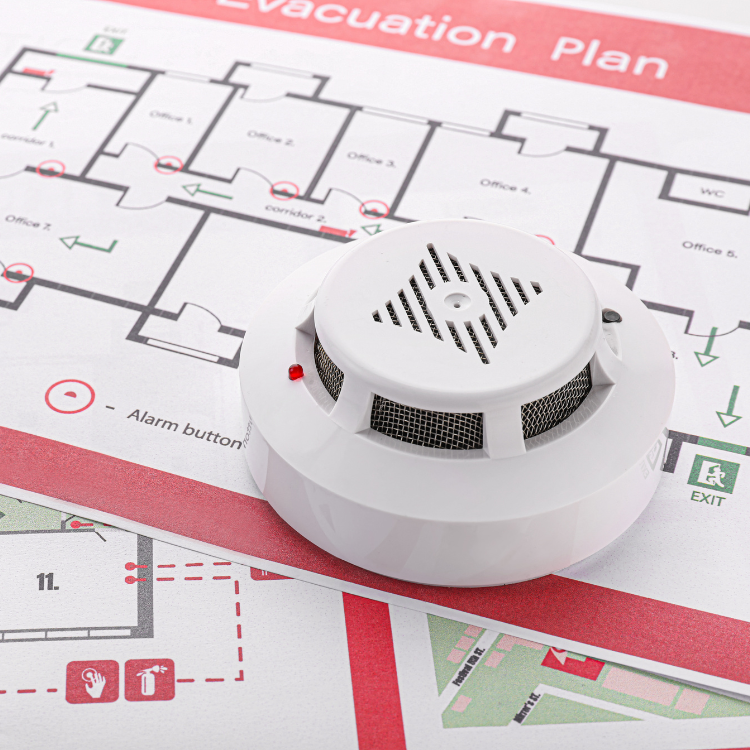

Smoke alarms are a critical part of home safety, but they can also be a pain to maintain and keep up with compliance.
A recent study showed that nearly one-third of homes in Queensland may not be compliant with Smoke Alarms QLD Regulations. This is a huge problem, as these compliance regulations save lives.
Ace Energy Smoke Alarms Queensland can help take the hassle out of smoke alarm repair, compliance, and installation. We’re experts in the field, and we’ll make sure your home is up to code – without breaking the bank.
What is a photoelectric smoke alarm?
A photoelectric smoke alarm, also known as an optical or photo-optical alarm, is a type of smoke alarm that uses a light sensor to detect visible particles of combustion. Research indicates that these types of alarms are generally more effective than other types of alarms across a wide range of fires experienced in homes.
Photoelectric smoke alarms are often used in commercial and industrial settings, as well as in residential settings. They are sometimes interconnected with other alarms in the same building so that if one alarm goes off, they all will. This can provide early warning of a fire and help to ensure everyone in the building is aware of the danger.
If you are considering installing a photoelectric smoke alarm in your home, it is important to read the instructions carefully and follow them exactly. This will help to ensure that the alarm is installed correctly and will work properly in the event of a fire.
If you have any concerns we recommend requesting the help of a qualified electrician.

Queensland Smoke Alarm Legislation
EXISTING DWELLINGS FOR OWNERS / OCCUPIERS
From 1 January 2017 From 1 January 2027
When replacing smoke alarms, they
must be of a photoelectric type
which complies with Australian
Standard (AS) 3786-2014.
Existing smoke alarms
manufactured more than ten years
ago must be replaced. (Note:
Smoke alarms should have the date
of manufacture stamped on them.)
Smoke alarms that do not operate
when tested must be replaced
immediately.
Existing hardwired smoke alarms
that need replacement must be
replaced with a hardwired smoke
alarm.
Each smoke alarm in all dwellings must:
i) be photoelectric (AS 3786-2014); and
ii) not also contain an ionisation sensor; and
iii) be less than 10 years old; and
iv) operate when tested; and
v) be interconnected with every other smoke alarm in the dwelling so all
activate together.
Smoke alarms must be installed on each storey:
i) in each bedroom; and
ii) in hallways which connect bedrooms and the rest of the dwelling; or
iii) if there is no hallway, between the bedrooms and other parts of the
storey; and
iv) if there are no bedrooms on a storey at least one smoke alarm must be
installed in the most likely path of travel to exit the dwelling.
Smoke alarms must be either hardwired or powered by a non-removable
10 year battery, or a combination of both may be allowed.
DWELLINGS BEING SOLD, LEASED OR AN EXISTING LEASE IS RENEWED
From 1 January 2017 From 1 January 2022
Smoke alarm legislation requirements as for existing
dwellings.
Existing landlord’s and tenant’s
obligations regarding the
installation and testing of smoke
alarms continue.
Property sellers must continue
to lodge a Form 24 with the
Queensland Land Registry Office
stating the requirements of the
smoke alarm legislation have
been met.
Each smoke alarm in the dwelling must:
i) be photoelectric (AS 3786-2014); and
ii) not also contain an ionisation sensor; and
iii) be less than 10 years old; and
iv) operate when tested; and
v) be interconnected with every other smoke alarm in the dwelling so all
activate together.
Smoke alarms must be installed on each storey:
i) in each bedroom; and
ii) in hallways which connect bedrooms and the rest of the dwelling; or
iii) if there is no hallway, between the bedrooms and other parts of the
storey; and
iv) if there are no bedrooms on a storey at least one smoke alarm must be
installed in the most likely path of travel to exit the dwelling.
Smoke alarms must be hardwired or powered by a non
NEW DWELLINGS AND DWELLINGS BEING SUBSTANTIALLY RENOVATE
From 1 January 2017
Smoke alarm legislation requires
the development approval process
for new dwellings and substantial
renovations will ensure that
building approvals received on or
after this date will bring dwellings
into compliance with the new laws.
Each smoke alarm in the dwelling must:
i) be photoelectric (AS 3786-2014); and
ii) not also contain an ionisation sensor; and
iii) be hardwired to the mains power supply with a secondary power source
(i.e. battery); and
iv) be interconnected with every other smoke alarm in the dwelling so all
activate together.
Smoke alarms must be installed on each storey:
i) in each bedroom; and
ii) in hallways which connect bedrooms and the rest of the dwelling; or
iii) if there is no hallway, between the bedrooms and other parts of the
storey; and
iv) if there are no bedrooms on a storey at least one smoke alarm must be
installed in the most likely path of travel to exit the dwelling.
NEW DWELLINGS AND DWELLINGS BEING SUBSTANTIALLY RENOVATE

PRESCRIBED LOCATIONS FOR INSTALLING SMOKE ALARMS
Where practicable smoke alarms must be placed on the ceiling. Smoke alarms must not be placed:
i) within 300mm of a corner of a ceiling and a wall;
ii) within 300mm of a light fitting;
iii) within 400mm of an air-conditioning vent;
iv) within 400mm of the blades of a ceiling fan.
There are special requirements for stairways, sloping ceilings, and ceilings with exposed beams. These requirements
are explained in the Building Fire Safety Regulation 2008. Penalties may be imposed for non compliance with the law.
Get In Touch With Us
To Get Your Free Quote
Phone
0413 370 474
info@aceenergy.com.au